Showing posts with label Science. Show all posts
Saturday, June 8, 2013
Sunday, June 2, 2013
Our Questions
We asked lots of open-ended questions about clouds...
Here are some of them.
How are clouds made?
How many different types of clouds are there?
What are clouds made of?
Why are clouds white?
Why are some clouds black?
What is a cloud?
Why do they float?
How does the water drops get into the cloud?
What is water vapour and how is it made?
How did the clouds get their names?
What makes the clouds let out the rain?
Why do the clouds move?
Here are some of them.
How are clouds made?
How many different types of clouds are there?
What are clouds made of?
Why are clouds white?
Why are some clouds black?
What is a cloud?
Why do they float?
How does the water drops get into the cloud?
What is water vapour and how is it made?
How did the clouds get their names?
What makes the clouds let out the rain?
Why do the clouds move?
Labels:
Clouds,
Inquiry,
Planet Earth and Beyond,
Science,
Weather
Types of Clouds
![]() |
| Click to learn more and play cloud games |
![]() |
| Different clouds can be seen at different levels in the sky |
Labels:
Clouds,
Inquiry,
Planet Earth and Beyond,
Science,
Weather
Saturday, June 1, 2013
Wednesday, August 22, 2012
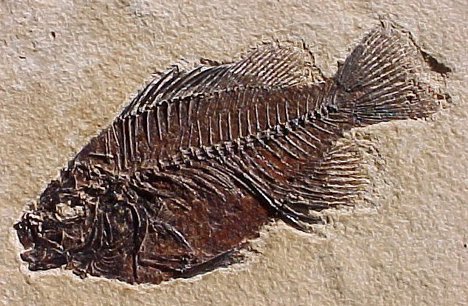
Fossilisation
WALT... sequence pictures and explanations to show the fossilisation process
Here is an example of today's lesson. We had to put the pictures in order then match the explanation.
Fossils
We are learning about fossils.
Plants
Fossils
- Fossils are
traces of things that happened long ago
- Plants and
animals can become fossils
- We have
only discovered a small number of the plants and animals from the past
- Fossils are
not the original, only a copy
- The most famous fossils are of dinosaurs
- There are also fossils of sea creatures and mammals
- Sometimes many fossils are found in one place because of a flood, earthquake, or other disaster
Plants
- The most famous example of fossilised plants is petrified wood
- Ferns, tree leaves, and other plants have been found, too
- Fossils are often found by accident
- Paleontologists and geologists use clues in the rocks to find good places to hunt for fossils
- Excavating fossils is hard work, and must be done carefully
- A fossil is made when a plant or animal is covered quickly with mud or ash
- The organism’s tissues are replaced over a long period of time with minerals from the soil it was buried in
- Fossils can be dated by the layer of rock they were found in, or by radiocarbon dating
- Many fossils give us an idea of what life was like long ago
- Plants give clues about the diet of animals
- Animals give clues about the availability of plants and the climate when they lived
- Many clues fit together to make a more complete picture of what the world was like long ago
- No matter how many clues we have, we can never really know what life was like long ago
- We can make an educated guess, and fill in the gaps using what we know about life today
- It’s fun to imagine what it was like when the dinosaurs lived. Try it next time you feel bored!
Sunday, March 18, 2012
Progress on our experiements
The seeds in the dark have germinated and the shoot is about 3 cm long. The one in the sun has just sprouted.
Thursday, March 15, 2012
Popcorn Seeds from the Supermarket
Tomorrow we are going to plant lots of popcorn seeds bought at the supermarket, in a small green house. Do you think it will grow? Most of the class think it will not grow. Some think it will grow. I wonder who will be right? Watch this space!
How Popcorn Pops
The kernels are a seed and when you heat it up, the inside turns into steam. The steam pushes on the inside of the shell. The shell explodes and turns into popcorn that you can eat(diagram included in published work).
Roman (Year 3)
Roman (Year 3)
Labels:
English,
Explanation,
Inquiry,
Material World,
Popcorn,
Roman,
Science,
Transactional Writing
How Popcorn Kernels Turn Into Popcorn
There is a tiny bit of water in the kernel that heats up and steams and tries to boil, but the hull traps it in there. When the pressure gets too great, the kernel turns inside out and turns into popcorn. (diagram included in published copy)
Jamie (Year 3)
Labels:
English,
Explanation,
Inquiry,
Jamie,
Material World,
Popcorn,
Science,
Transactional Writing
How Does Popcorn Pop?
This is how popcorn pops. When the heat goes on the seed it makes steam in the seed and it gets really hot, like a classroom full of children! Then it explodes and turns inside outbecause it is too much for it. It turns into a fluffy piece of yummy popcorn.
(diagram included in published copy)
Harry (Year 4)
Labels:
English,
Explanation,
Harry,
Inquiry,
Material World,
Popcorn,
Science,
Transactional Writing
Popcorn
The inside of the popcorn seed boils until it is very hot, then the water turns into steam. The steam really wants to get out of the popcorn seed. It pushes and pushes and pushes until it explodes and it turns inside out. Then it is fluffy creamy-white popcorn. They are very different shapes and sizes - some are bumpy, some look like bumble bees and some look like ballerinas.
( diagram was included on her published copy)
Georgie ( Year 4)
Labels:
English,
Explanation,
Georgie,
Inquiry,
Material World,
Science,
Transactional Writing,
Writing
How Popcorn Pops!
The seed has a little water in it and the heat turns the water into steam. The steam is kept in the seed. The hull (shell) traps the steam and the steam pushes and pushes until the power is so great. The seed turns inside out and the starch turns into fluffy white popcorn and the hull is soft. ( Diagram included in published copy)
Otis (Year 3)
Otis (Year 3)
Labels:
English,
Explanation,
Inquiry,
Material World,
Otis,
Popcorn,
Science,
Transactional,
Writing
Tuesday, March 13, 2012
The Physical Properties of Popcorn

WALT... find out about the physical characteristics of unpopped and popped popcorn
We looked at unpopped and popped popcorn and answered these questions as a class.

Questions:
What colour is it?
What size is it?
What shape is it?
What does it feel like?
What does it smell like?
What does it taste like?
Have the physical properties of the popcorn changed?
If so what are the differences?
Subscribe to:
Posts (Atom)


.gif)