Showing posts with label Planet Earth and Beyond. Show all posts
Saturday, June 8, 2013
Sunday, June 2, 2013
Our Questions
We asked lots of open-ended questions about clouds...
Here are some of them.
How are clouds made?
How many different types of clouds are there?
What are clouds made of?
Why are clouds white?
Why are some clouds black?
What is a cloud?
Why do they float?
How does the water drops get into the cloud?
What is water vapour and how is it made?
How did the clouds get their names?
What makes the clouds let out the rain?
Why do the clouds move?
Here are some of them.
How are clouds made?
How many different types of clouds are there?
What are clouds made of?
Why are clouds white?
Why are some clouds black?
What is a cloud?
Why do they float?
How does the water drops get into the cloud?
What is water vapour and how is it made?
How did the clouds get their names?
What makes the clouds let out the rain?
Why do the clouds move?
Labels:
Clouds,
Inquiry,
Planet Earth and Beyond,
Science,
Weather
Types of Clouds
![]() |
| Click to learn more and play cloud games |
![]() |
| Different clouds can be seen at different levels in the sky |
Labels:
Clouds,
Inquiry,
Planet Earth and Beyond,
Science,
Weather
Saturday, June 1, 2013
Wednesday, August 22, 2012
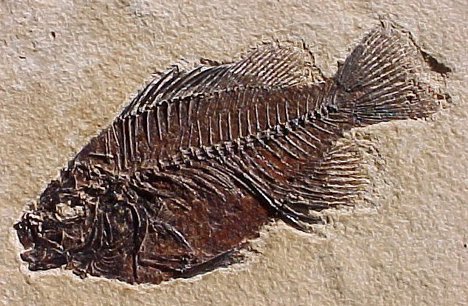
Fossilisation
WALT... sequence pictures and explanations to show the fossilisation process
Here is an example of today's lesson. We had to put the pictures in order then match the explanation.
Fossils
We are learning about fossils.
Plants
Fossils
- Fossils are
traces of things that happened long ago
- Plants and
animals can become fossils
- We have
only discovered a small number of the plants and animals from the past
- Fossils are
not the original, only a copy
- The most famous fossils are of dinosaurs
- There are also fossils of sea creatures and mammals
- Sometimes many fossils are found in one place because of a flood, earthquake, or other disaster
Plants
- The most famous example of fossilised plants is petrified wood
- Ferns, tree leaves, and other plants have been found, too
- Fossils are often found by accident
- Paleontologists and geologists use clues in the rocks to find good places to hunt for fossils
- Excavating fossils is hard work, and must be done carefully
- A fossil is made when a plant or animal is covered quickly with mud or ash
- The organism’s tissues are replaced over a long period of time with minerals from the soil it was buried in
- Fossils can be dated by the layer of rock they were found in, or by radiocarbon dating
- Many fossils give us an idea of what life was like long ago
- Plants give clues about the diet of animals
- Animals give clues about the availability of plants and the climate when they lived
- Many clues fit together to make a more complete picture of what the world was like long ago
- No matter how many clues we have, we can never really know what life was like long ago
- We can make an educated guess, and fill in the gaps using what we know about life today
- It’s fun to imagine what it was like when the dinosaurs lived. Try it next time you feel bored!
Wednesday, June 22, 2011
Tuesday, June 21, 2011
E Mail From a Planet

Today we imagined that we were visiting one of the planets. We had to send an email to our family and friends to tell them about our experience. We had to include a “photo” that we took while visiting the planet.
Labels:
Inquiry,
Planet Earth and Beyond,
Planets,
Planets Science,
Science
Monday, June 20, 2011
Our address in the Universe
WALT... understand that the Universe is a huge place ... write our address in the Universe
... design a Planet stamp to put on your envelope
(Your name)
7 Ironside Drive
Wanaka
Central Otago
South Island
New Zealand
Southern Hemisphere
The Earth
The Solar System
The Milky Way Galaxy
The Local Group
The Local Supercluster
The Universe
How big is the universe? For a long time, people believed the universe was infinitely big and it went on forever in every direction. Today, we know that is not true. The universe does end somewhere very far way. But the end is so far away that our regular measurement units are no longer useful to measure it.
The distance from Wanaka to Auckland is 997.58 kilometres.
The distance from the Earth to the moon is 356,000 kilometres.
The distance from the Earth to the Sun is 150,000,000 kilometres .
The distance to even the nearest star is more than 40,000,000,000,000 kilometres.
You can see that our regular units of distance don't work for the size of the universe.
Instead, astronomers use a unit of distance called the light-year
One light-year is the distance that light travels in one year: one light-year is equal to 9,458,000,000,000 kilometres. Using this new unit makes astronomical distances easier to express. The nearest star is 4.3 light-years away. (Remember that the star is still the same distance away, whether we express it as 40,000,000,000,000 kilometres or 4.3 light-years).
WOW!
Labels:
Inquiry,
Planet Earth and Beyond,
Planets,
Planets Science,
Science
Sunday, June 19, 2011
Star Lab
We had Star Lab ( the portable planetarium) at school last week. Will, the educator from Otago Museum, told us lots about the sun, the phases of the moon, the life cycle of stars and constellations including Greek and Maori tales. We all learnt heaps! Lots of great questions were asked too.
Labels:
Inquiry,
Planet Earth and Beyond,
Planets,
Planets Science,
Science,
Solar System
Thursday, June 16, 2011
Sunday, June 12, 2011
Friday, June 10, 2011
Subscribe to:
Posts (Atom)


.gif)